한국의

한국의

Get a Quote
업계 지식
Wedge Gate Valve Design and Sealing Principle
2026-01-30

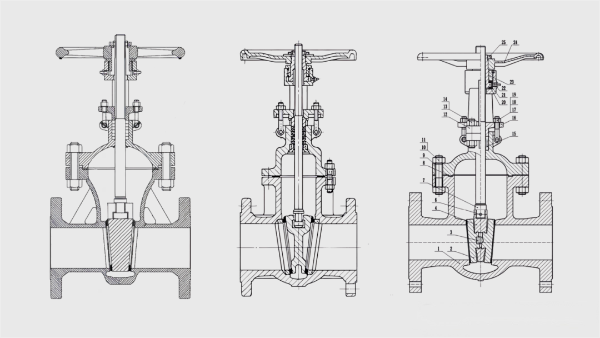
In a wedge gate valve, the gate sealing surfaces are wedge-shaped, forming a specific angle relative to the gate centerline. The gate is driven downward by the valve stem to achieve closure. As the stem thrust increases, the normal force acting on the wedge-shaped sealing surfaces also increases, creating a forced sealing effect. This design significantly improves sealing performance under low-pressure conditions.


During opening, the gate sealing surfaces disengage from the seat immediately, which helps reduce wear on the sealing faces and extends the service life of the valve.


Applicable Standards for Wedge Gate Valves


Wedge gate valves are commonly manufactured in accordance with the following standards:

● GB/T 12234-2019 – Steel gate valves with bolted bonnet for petroleum and natural gas industries

● GB/T 12232-2005 – General-purpose flanged cast iron gate valves

● API Standard 600 (2015) – Steel gate valves for petroleum and natural gas industries


Types of Wedge Gate Valve Gates


Wedge gate valves are typically available in three gate configurations:Solid wedge gate, Flexible wedge gate, Double wedge gate.


The flexible wedge gate and double wedge gate rely on controlled deformation of the sealing surfaces to achieve improved contact with the valve seat. This design enhances sealing reliability and effectively prevents gate binding or jamming caused by temperature variations, ensuring smooth operation even under fluctuating thermal conditions.


Wedge Gate Valves


Parallel Slide Gate Valve Design and Sealing Principle


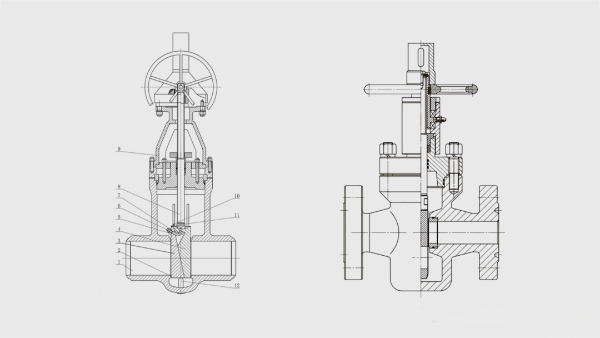
In a parallel slide gate valve, the sealing surfaces at both the inlet and outlet ends of the gate are parallel to the gate centerline. For single-gate configurations, sealing is primarily achieved by the medium pushing a floating gate or floating seat into position. In double-gate configurations, sealing can be accomplished through springs or an expansion mechanism between the gates. Throughout the opening and closing process, the gate and seat sealing surfaces remain in constant contact, ensuring reliable sealing.


Applicable Standards for Parallel Slide Gate Valves


Common standards for parallel slide gate valves include:

● GB/T 23300-2009 – Parallel slide gate valves

● JB/T 5298-2016 – Steel parallel slide gate valves for pipelines

● API 6D – Pipeline valves for petroleum and natural gas industries


Types and Features of Parallel Slide Gate Valves


Parallel slide gate valves are available in single-gate and double-gate configurations.

● Gates may include flow-through holes or be solid. Gates with flow-through holes match the seat inner diameter, facilitating cleaning and drainage of the pipeline.

● Sealing can be configured at the inlet end, outlet end, or at both ends, depending on application requirements.


This design ensures flexibility in sealing arrangements while maintaining reliable operation during service.


Wedge Gate Valves

Comparison of the Two


1.Applicable Standards
Wedge gate valves and parallel slide gate valves are manufactured according to different industry standards.


2.Gate Geometry

Wedge gate valves feature a wedge-shaped gate.

Parallel slide gate valves have a flat gate, which may include flow-through holes to facilitate pigging or pipeline cleaning.


3.Stem Torque Requirements

Wedge gate valves rely on downward stem force to push the wedge-shaped gate into the seat, achieving a forced seal. This requires higher operating torque.

Parallel slide gate valves achieve sealing through medium pressure pressing the gate against the seat, resulting in lower stem torque requirements.


4.Electric Actuator Limit Control

Electric wedge gate valves use torque switches to control closure, ensuring sufficient stem force is applied to generate the required sealing pressure.

Parallel slide gate valves use travel switches to control gate position; maintaining specific torque is not required.


5.Suitability for Media with Suspended Particles

Wedge gate valves separate the gate and seat during opening; particles can enter the sealing surfaces during closure, potentially causing leakage and surface damage.

Parallel slide gate valves maintain constant contact between the gate and seat sealing surfaces during operation, preventing particles from entering the seal, making them better suited for media containing suspended solids.


6.Effect of Temperature Variations on the Gate

In wedge gate valves, excessive temperature rise while closed may cause stem thermal expansion, potentially jamming the gate.

In parallel slide gate valves, stem expansion does not affect gate sealing or cause jamming.


7.Stem Protection for Rising-Stem Valves

Rising-stem wedge gate valves have exposed stems without protective covers.

Rising-stem parallel slide gate valves include a stem cover that protects threads from dust and rain corrosion, and often incorporates an open/close position indicator.


8.Use of Lubricant on Packing and Gate Surfaces

Wedge gate valves typically do not apply lubricants to packing or gate sealing surfaces.

Parallel slide gate valves may use grease to lubricate the gate and packing, reducing wear, enhancing seal performance, and preventing packing from drying out.

메시지를 남겨주세요

    에 관심이 있다면 우리의 제품과한 자세한 내용을 알고 싶다면,메시지를 남겨주십시오 여기,우리가 응답할 것입니다 당신은 빨리 우리가 할 수 있습니다.

제품

접촉