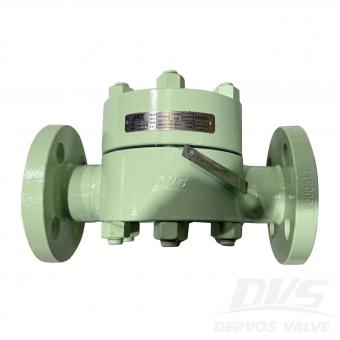
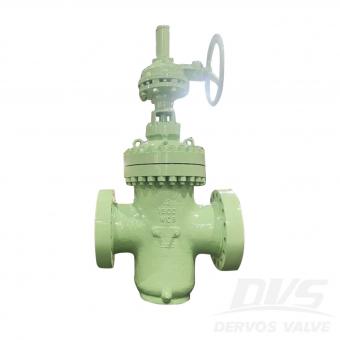
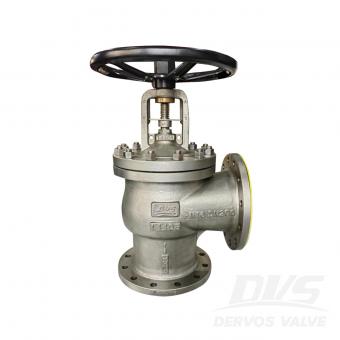
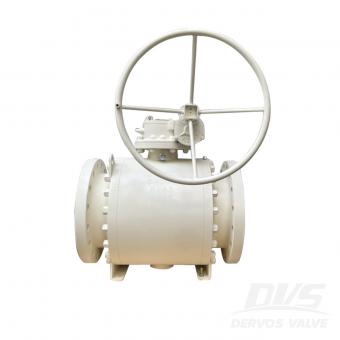
A lift check valve features a disc that slides along the vertical centerline of the valve body.
Installation: Primarily for horizontal pipelines. For high-pressure, small-diameter valves, the disc may be a spherical shape.
Design: The valve body is shaped like a globe valve (interchangeable with globe valves), so it has a relatively high flow resistance coefficient.
● The valve disc and body are structurally similar to a globe valve.
● The upper part of the disc and lower part of the bonnet have a guide sleeve, allowing the disc to freely move up and down within the valve body.
Operation:
● When fluid flows forward, the disc is pushed open by the fluid.
● When flow stops, the disc falls under its own weight onto the seat, preventing reverse flow.
Flow Orientation:
● Straight-through lift check valve: Inlet/outlet passage is perpendicular to the seat passage.
● Vertical lift check valve: Inlet/outlet passage is aligned with the seat passage, resulting in lower flow resistance than the straight-through type.
A swing check valve has a disc-shaped valve disc that rotates around a hinge axis at the seat passage.
Flow Characteristics:
● The internal flow path is streamlined, giving lower flow resistance compared to lift check valves.
● Suitable for low-flow and relatively stable large-diameter pipelines, but not recommended for pulsating flow.
● Sealing performance is inferior to lift check valves.
Types:
● Single-disc, double-disc, and multi-disc designs.
● These types are chosen mainly based on valve diameter, aiming to reduce hydraulic shock when flow stops or reverses.
The wafer or dual-plate check valve is structurally similar to a butterfly valve but differs in operation:
Automatic Operation: Unlike butterfly valves, which require external actuation, wafer check valves operate automatically.
Closing Mechanism: When flow stops or reverses, the disc(s) rotate onto the seat under their own weight and the reverse flow pressure.
Installation: Can be used in horizontal or vertical pipelines, typically wafer-style between flanges.
Operation Detail:
Two discs rotate around a pin shaft, overcoming spring force under fluid pressure.
The open position forms a “>” shape.
Straight pipe sections upstream and downstream are recommended to allow the discs sufficient rotation space.