사실 진술:화재 원인은 아직 조사 중이며, 공개된 정보로는 정확한 사고 원인을 확인할 수 없습니다. 따라서 본 기사에서는 사고 원인을 분석하거나 특정 밸브, 배관 부품 또는 장비와의 연관성을 지적하지 않습니다. 대신, 본 기사는 다음 사항에 초점을 맞춥니다.밸브 안전 일반적으로 관련된 문제들대규모 화학 시설의 시운전.
2026년 8월 25일, 러시아 극동 아무르 지역의 아무르 가스화학단지(AGCC)에서 대형 화재가 발생했습니다. 8월 26일 현재, 이 사고로 7명이 사망하고 152명이 부상을 입었으며 9명이 실종되었습니다.
AGCC의 공식 발표에 따르면 화재는 다음 장소에서 발생했습니다.보조 프로세스 섹션 발전소의 열분해 장치다행히 주요 설비는 손상되지 않았습니다. 이번 사고는 매우 안타까운 일이며, 천연가스 화학 프로젝트에서 보조 공정 설비, 특히 밸브의 신뢰성이 결코 "보조적인" 문제가 아니라는 점을 다시 한번 상기시켜 줍니다.
안에틸렌 분해 장치 이는 매우 복잡한 시스템이며, 까다로운 공정 요구 사항을 충족해야 합니다. 분해로는 이 시스템의 핵심입니다.
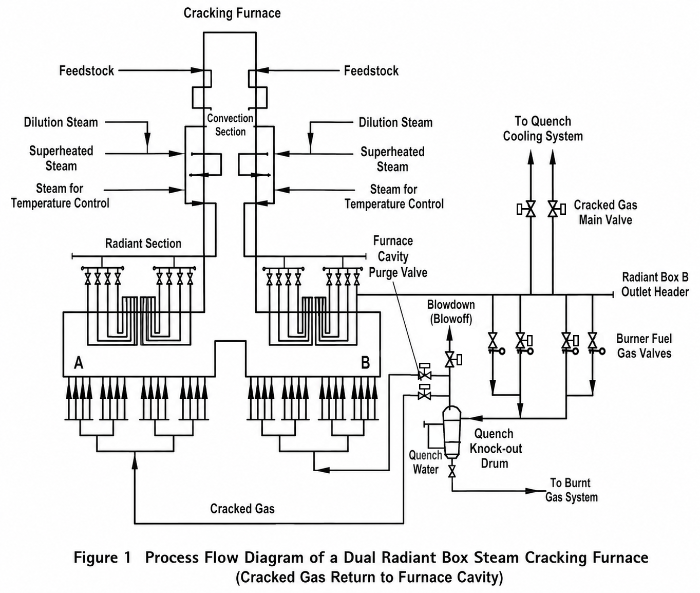
천연가스 또는 나프타를 800°C 이상의 온도에서 분해하여 에틸렌 및 프로필렌과 같은 기본 화학 원료를 생산하는 장치.
그만큼보조 기술 부서고온 반응의 중심인 분해로에 위치하지는 않지만, 전체 설비에 안정적인 설비와 다양한 보조 매체를 공급하여 주 설비의 지속적이고 안전한 작동을 보장하는 역할을 담당합니다.
보조 프로세스 섹션은 주로 다음과 같은 7개의 하위 시스템으로 구성됩니다.
1. 연료 가스/연료유 시스템: 이 시스템은 연료 가스 저장 용기, 녹아웃 드럼, 연료유 펌프, 여과기 및 버너를 포함하며, 분해로에 안정적이고 깨끗한 연료를 공급하는 역할을 합니다.
2. 증기 시스템: 핵심 장비는 증기 드럼으로, 이는 장치에 필요한 희석 증기, 고압 증기 및 기타 증기를 생성하고 분배합니다.
3. 급수 및 응축수 시스템: 여기에는 탈기기, 보일러 급수 펌프, 응축수 회수 탱크 및 증기 시스템에 적합한 물을 공급하고 처리하는 기타 장비가 포함됩니다.
4. 압축 및 냉각 시스템: 여기에는 다단 압축기, 중간 냉각기, 분리 장치 및 냉각 압축기가 포함되며, 이는 분해 가스를 압축 및 냉각하고 하류 분리 공정에 필요한 냉각을 제공하는 데 사용됩니다.
5. 건조 및 정화 시스템: 이 시스템은 주로 분해 가스에서 미량의 수분을 제거하고 저온에서 하류 장비의 동결 및 막힘을 방지하기 위해 사용되는 분자체 건조기로 구성됩니다.
6. 안전 배기 및 소각 시스템: 여기에는 시동, 정지 또는 비상 상황 시 장치에서 배출되는 가연성 가스를 안전하게 연소 및 처리하는 데 사용되는 플레어 배출 드럼, 플레어 팁 및 기타 장비가 포함됩니다.
7. 디코킹 시스템: 여기에는 다음이 포함됩니다.탈탄 밸브분해로 튜브에서 코크스 침전물을 주기적으로 제거하고 열 전달 효율을 복원하는 데 사용되는 탈코크 파이프라인 및 기타 장비.
밸브는 보조 시스템에서 가장 많고 다양한 종류의 중요 장비입니다. 밸브는 공정 매체의 유량, 압력 및 방향을 차단, 조절 및 제어하는 등의 중요한 기능을 수행합니다. 다음은 일반적인 밸브 유형과 보조 공정 부분에서의 적용 사례입니다.
이 밸브는 에틸렌 생산 설비에 사용되는 가장 대표적인 밸브 유형 중 하나입니다. 주요 용도는 다음과 같습니다.이송 라인 밸브(TLV) 그리고탈기 라인 밸브(DLV)이 밸브들은 분해로 출구에 설치됩니다. 최대 700°C 이상의 고온과 코크스 입자를 포함하는 공정 매체를 사용하는 극한 조건에서 빈번하게 작동해야 하며, 정상 생산 모드와 탈코크스 모드 사이를 전환해야 합니다. 주요 기술적 과제는 다음과 같습니다.밸브 고착 그리고밸브 내부 공간에 코크스가 축적되었습니다.
제어 밸브는 연료 가스 및 공급 유량 제어, 희석 증기 분사 제어, 압축기 서지 방지 제어와 같이 정밀한 유량 조절이 필요한 용도에 사용됩니다. 일반적인 밸브 유형은 다음과 같습니다.글로브 밸브 및 V형 포트 세그먼트/볼 밸브.
비상차단 밸브에스 비상 상황에서 공정 매체를 신속하고 안전하게 격리하는 데 사용됩니다. 연료 가스/연료유 파이프라인에서,이중 격리 및 출혈 일반적으로는 절대적인 안전을 보장하기 위해 두 개의 ESDV 사이에 블리드 밸브를 설치하는 구성이 채택됩니다. 일반적인 밸브 유형에는 다음이 포함됩니다.볼 밸브 그리고게이트 밸브.
볼 밸브 보조 시스템에 널리 사용됩니다. 예를 들어, 건조기 시스템에서 사용됩니다.금속 시트 볼 밸브금속 시트 볼 밸브는 일반적으로 잦은 스위칭 작동과 온도 변화에 대처하기 위해 선택됩니다. 높은 차압과 빈번한 작동이 수반되는 조건에서는 성능과 수명을 보장하기 위해 금속 시트 볼 밸브가 선호됩니다.
체크 밸브에스 이는 공정 매체의 역류를 방지하고 압축기와 같은 중요 장비를 보호하는 데 사용됩니다.대구경스윙 체크 밸브에스대형 파이프라인에 사용됩니다.
For large-diameter applications requiring low pressure drop,butterfly valves are an efficient and economical option. For example, triple offset metal-seated butterfly valvesare commonly used in flue gas or hot-air pipelines.
As the final safeguard, safety valves are installed on pressure vessels and high-pressure pipelines. They automatically open to relieve pressure when the system becomes overpressurized.
Transfer line valves and decoking line valves are installed at the outlet of cracking furnaces, where operating temperatures can reach 700°C or above and the process medium contains coke particles. Under these operating conditions, valves face two major challenges: sticking and coke accumulation inside the valve cavity. Once a valve is unable to open or close properly, operation of the entire cracking furnace will be affected. More dangerously, if the valve loses its sealing performance at high temperatures, leaked high-temperature cracked gas may cause a deflagration upon contact with air.
According to Russian media reports, the AGCC fire occurred during equipment depressurization operations. The commissioning stage is one of the most dangerous periods in a chemical project — equipment is exposed to actual process media for the first time, while temperature, pressure, vibration, and corrosion challenges occur simultaneously.
Historically, similar lessons are not uncommon:
● In 2021, during a shutdown and maintenance period at the No. 2 ethylene unit of the Olefins Division of Shanghai Petrochemical, the upstream and downstream valves of a blind plate on the cracking furnace feed pipeline were not closed, resulting in a deflagration accident.
● At a chemical plant in Shandong, China, a valve failure caused butadiene leakage, which resulted in a deflagration.
● At a naphtha cracking plant in South Korea, a fire was caused when butane gas leaking from a faulty valve was ignited by welding sparks.
These cases have one thing in common: valve failure was the first domino in the accident chain.
Under high-temperature and high-pressure operating conditions, the packing gland andsealing surfaces of a valve are the weakest points. Packing gland leakage can cause combustible media to escape directly into the surrounding environment, where contact with an ignition source may result in a fire. Failure of the sealing surfaces, resulting in internal leakage, may cause downstream equipment to become overpressurized or may expose personnel to poisoning or asphyxiation during maintenance.
Under high-temperature and high-pressure operating conditions, the packing gland and sealing surfaces of a valve are the weakest points. Packing gland leakage can cause combustible media to escape directly into the surrounding environment, where contact with an ignition source may result in a fire. Failure of the sealing surfaces, resulting in internal leakage, may cause downstream equipment to become overpressurized or may expose personnel to poisoning or asphyxiation during maintenance.
For high-temperature operating conditions involving coke particles, such as TLV/DLV service, high-end valves featuring apressure seal structure — where higher pressure improves sealing reliability — an integrally forged valve body — with no weld seams and high strength — and hard-alloy hardfaced sealing surfaces — providing wear resistance and high-temperature resistance — must be selected. Valve selection should not be driven by price, but by full life-cycle reliability.
Valves and actuators used in natural gas chemical facilities should have the appropriate explosion-proof certifications, such as ATEX and IECEx. The fire-safe design of valves should comply with API 607 or API 6FA standards — meaning that under fire conditions, even if non-metallic seals fail, the valve can still maintain a certain level of sealing performance.
Based on lessons learned from historical accidents,valve inspections during commissioning should include at least the following:
Leak Tightness Test: Conduct shell tests and seat leakage tests to confirm that there is no internal or external leakage.
Operation Test: Confirm that the valve can fully open and fully close smoothly and that the actuator reaches the correct position.
Packing Gland Inspection: Confirm that the packing gland is properly tightened and check for any signs of leakage.
Internal Cleanliness Confirmation: Confirm that there is no welding slag, debris, or other construction residue inside the valve.
Explosion-Proof and Grounding Inspection: Confirm that the actuator explosion-protection rating and static grounding comply with requirements.
Safety Valve Set Pressure Verification:The set pressure should not exceed 1.1 times the maximum working pressure.
The sealing technology ofhigh-temperature high-pressure valves 공정 매체 누출을 방지하는 데 매우 중요합니다.
압력 밀봉 구조: 내부 시스템 압력을 이용하여 밀봉력을 증가시키므로 압력이 높아질수록 더욱 안정적인 밀봉이 가능합니다.
경합금 경화 표면 밀봉 처리: 코발트계 경질 합금(예: ...)스텔라이트밀봉 표면에 경화 처리되어 내마모성, 내열성 및 내마모성을 제공합니다.
밸브 스템의 내식성 질화 처리: 밸브 스템의 표면 경도와 내식성을 향상시킵니다.
풀무 봉인: 독성 및 유해 매체에 적합하며 위험을 제거합니다.패킹 글랜드 누출.
AGCC 화재는 매우 안타까운 비극입니다. 사고의 최종 원인은 아직 조사 중이지만, 보조 공정 구역에서 화재가 발생했다는 사실만으로도 화학 시설 내 보조 시스템 및 관련 장비의 안전 중요성을 재고해야 할 충분한 이유가 됩니다.
밸브 산업에 있어 모든 사고는 경고이자 성찰의 기회입니다. 특히 다음과 같은 상황에서는 더욱 그렇습니다.고온,고압,혹독한 서비스 환경에서도 제품의 신뢰성을 확보하는 것은 필수적인 요구 사항입니다.